
Concrete: A History of Strength, Innovation and Enduring Use in Modern Construction
By Concrete Plot
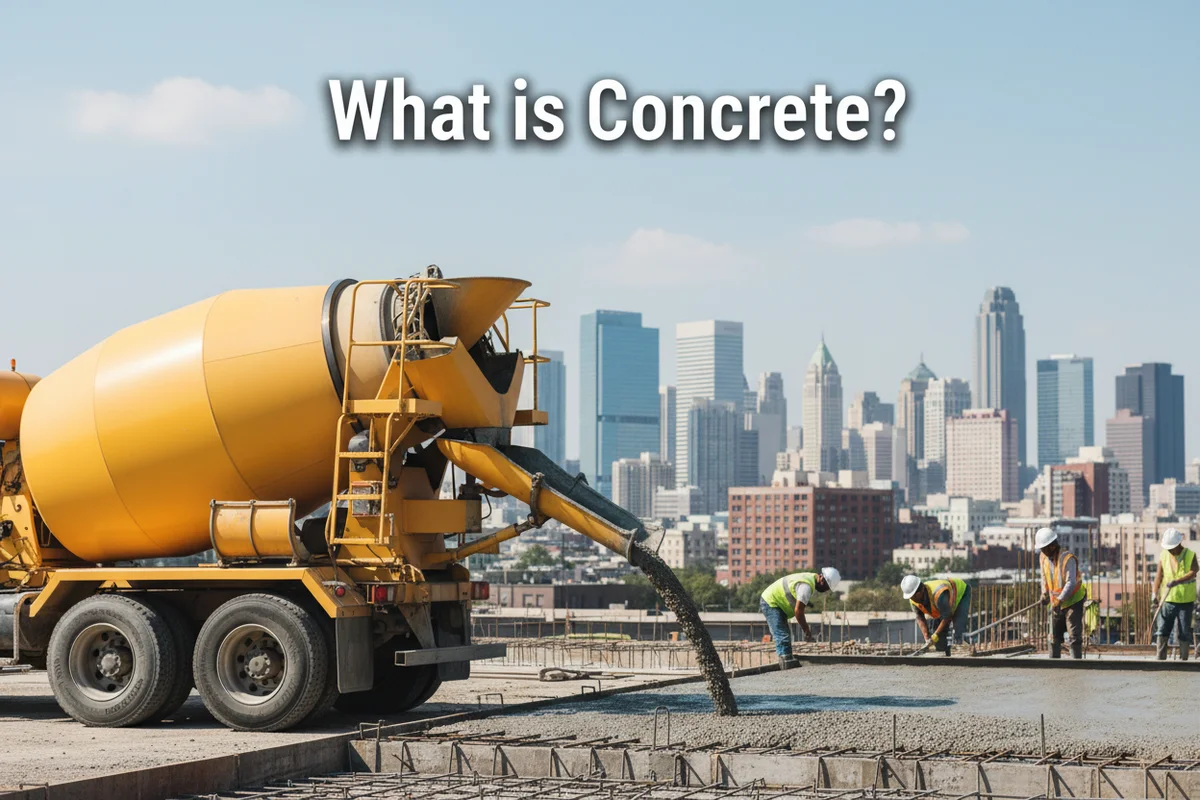
Explore the fascinating history of concrete, its innovations, and why it remains a cornerstone of modern construction across the globe.
Concrete: A History of Strength, Innovation and Enduring Use in Modern Construction
Few materials have shaped the built environment as profoundly or as consistently as concrete. From ancient temples and Roman aqueducts to modern skyscrapers and highway overpasses, concrete has remained the foundational material of choice for builders, engineers and developers across thousands of years and countless civilisations. Understanding what concrete is, how it works and why it continues to dominate construction today is essential knowledge for anyone involved in building, whether you are a homeowner planning a new driveway or a developer overseeing a large commercial project.
A Material With Ancient Roots
The story of concrete begins far earlier than most people realise. Ancient civilisations experimented with binding materials to create durable structures, but it was the Romans who developed something remarkably close to what we would recognise as concrete today. Around 300 BCE, Roman builders began using a mixture that incorporated volcanic ash known as pozzolana, combined with lime and seawater, to create a binding material of extraordinary strength and longevity. Structures such as the Pantheon in Rome stand as enduring testament to just how effective this early concrete was, having survived for nearly two thousand years without significant structural failure.
Modern concrete as we know it today, however, owes its existence to an English bricklayer and inventor named Joseph Aspdin, who in 1824 developed and patented Portland cement. Aspdin produced the cement by burning finely ground chalk and clay together at high temperatures and then grinding the resulting material into a fine powder. He named it Portland cement because the hardened material resembled the colour of Portland stone, a popular building material quarried on the Isle of Portland in Dorset. This invention, now over two hundred years old as of 2026, transformed the construction industry and laid the groundwork for the concrete-dependent world we live in today.
What Concrete Is Made Of
At its most fundamental level, concrete is a composite material made up of three primary components: aggregate, cement and water. The aggregate typically consists of sand and gravel, which serve as the hard, chemically inert particulate substance that gives concrete its bulk and body. The cement acts as the binding agent, and when mixed with water, it undergoes a chemical reaction known as hydration that causes the mixture to harden and gain strength over time. The proportions of these components, as well as the quality of the materials used, have a significant influence on the final strength and durability of the concrete produced.
One of the most important characteristics of concrete is its compressive strength, which refers to its ability to withstand loads that push inward and compress the material. Structural concrete typically achieves compressive strengths ranging from 25 to 85 megapascals, or approximately 3,500 to 12,000 pounds per square inch, depending on the mix design and intended application. This makes concrete exceptionally well suited for foundations, columns, walls and other structural elements that must bear heavy vertical loads. However, concrete has a notable weakness in that it performs poorly under tensile stress, which is the kind of pulling or stretching force that occurs in beams, slabs and other elements subject to bending.
The Role of Steel Reinforcement
Because concrete is strong in compression but relatively weak in tension, engineers and builders have long sought ways to compensate for this limitation and allow concrete to be used in a much wider range of structural applications. The solution that has proven most effective and most widely adopted is the embedding of steel reinforcement bars, commonly known as rebar, within the concrete before it sets and hardens. The combination of concrete and steel reinforcement, referred to as reinforced concrete, brings together the compressive strength of concrete and the tensile strength of steel in a way that makes the composite material far more capable and versatile than either material would be on its own.
Steel is particularly well suited to this role for several important reasons. According to the Concrete Reinforcing Steel Institute, steel's elastic properties and its ability to elongate under load mean that it provides well-defined and predictable behaviour when a reinforced concrete structure is subjected to overload conditions, including the formation of visible cracks that serve as a warning before any catastrophic failure occurs. This predictability is critically important in structural engineering, where safety margins must be carefully calculated and maintained. In North America, the most commonly used rebar grade is Grade 60, which has a yield strength of 60,000 pounds per square inch and is specified in a wide range of residential, commercial and infrastructure projects.
Concrete in the Modern World
Today, concrete is the most widely produced construction material on the planet, accounting for approximately 70 percent of all construction materials produced annually worldwide. It is used in virtually every category of built infrastructure, including residential homes, commercial buildings, bridges, tunnels, dams, roads, airports and marine structures. Its popularity stems from a combination of properties that are difficult to replicate with any other single material, including its versatility in being cast into almost any shape, its resistance to fire, its relatively low cost compared to alternatives and its ability to be produced using locally sourced materials in most parts of the world.
Environmental Considerations and Durability
Despite its many advantages, concrete is not without its challenges. The production of Portland cement is a significant source of carbon dioxide emissions and contributes meaningfully to global greenhouse gas output, which has prompted ongoing research into more sustainable alternatives such as supplementary cementitious materials and low-carbon cement formulations. Additionally, while concrete is inherently durable, it can be susceptible to cracking and degradation over time if it is not properly mixed, placed, cured or maintained, and these factors must be carefully managed throughout the construction process to ensure long-term structural performance.
A Foundation for the Future
Concrete's journey from Roman volcanic ash mixtures to high-strength modern formulations reinforced with precision-engineered steel is a story of continuous refinement and adaptation. It remains the backbone of the built environment and will continue to be so as the construction industry works to develop more sustainable and resilient approaches to its production and use. For anyone planning a construction project, understanding the fundamentals of concrete is the essential first step toward making informed decisions about materials, methods and long-term performance.